
Rust Free World

GFRP in Bridges & Flyovers
Long‑lasting, low‑maintenance reinforcement for elevated structures
Why GFRP for This Sector?
Bridges and flyovers are subject to extreme conditions: de‑icing salts, heavy dynamic loads, and weather exposure. GFRP rebars provide an excellent alternative to steel, eliminating corrosion, reducing maintenance, and extending structural life to 75+ years.
Sub-categories covered
Problem → Solution
Traditional steel reinforcement creates costly, long-term problems. GFRP solves them permanently.
Structural Vulnerability
Steel corrosion from de‑icing salts is the #1 cause of bridge deck deterioration Frequent repairs cause traffic disruptions and high costs Heavy steel reinforcement increases structural demands Short lifespan (30‑40 years) before major rehabilitation Conductive steel interferes with sensors and cathodic protection
Permanent Immunity
100% corrosion‑immune to salts and moisture Long design life of 75‑100 years with minimal maintenance Lightweight – reduces dead load and foundation costs Non‑conductive – eliminates galvanic corrosion Faster installation with lighter rebar cages
Primary Use Case
Bridge Reinforcement
Bridge Reinforcement
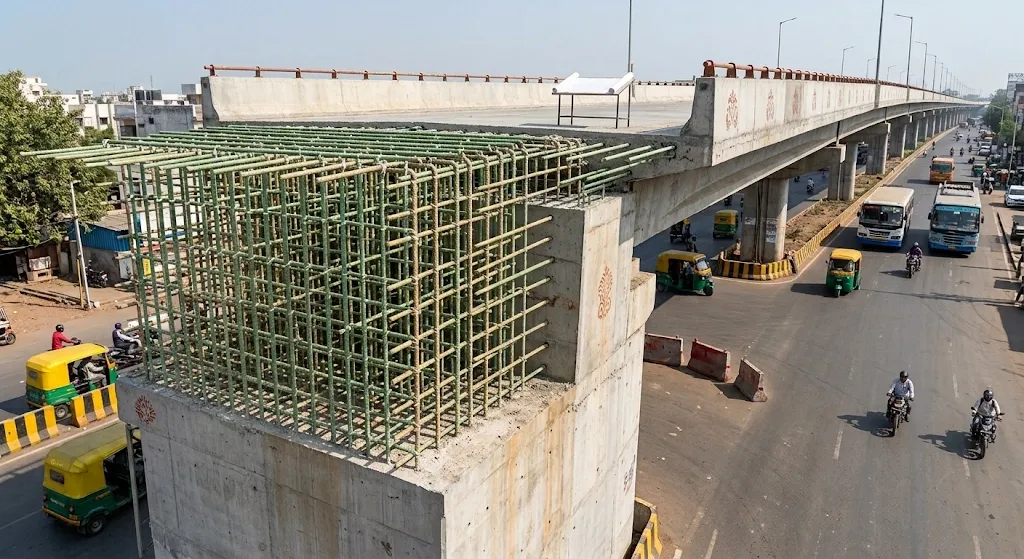
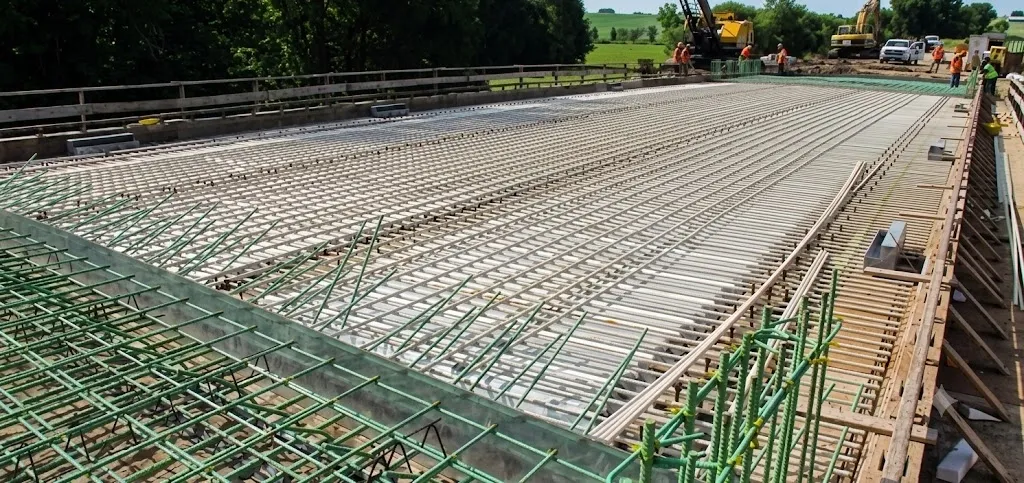
GFRP rebars are used in bridge decks, piers, and superstructures to prevent corrosion‑induced deterioration and ensure long‑term performance.
Corrosion‑resistant to de‑icing salts and moisture
High tensile strength for heavy traffic loads
Lightweight – reduces dead load
Minimal maintenance – extends service life
Non‑conductive – safe for monitoring systems
Technical Specifications
Performance parameters validated for this application domain.
Id
44
Tensile Strength
≥ 850 MPa
Modulus
42-52 GPa
Density
1.9-2.1 g/cm³
Corrosion Resistance
Excellent against salts
Thermal Expansion
All values tested under standard industry conditions
Ready to build the future of construction?
Join the leading engineers who trust Bhandari GFRP Rebar for lighter, stronger, and corrosion-free structures.