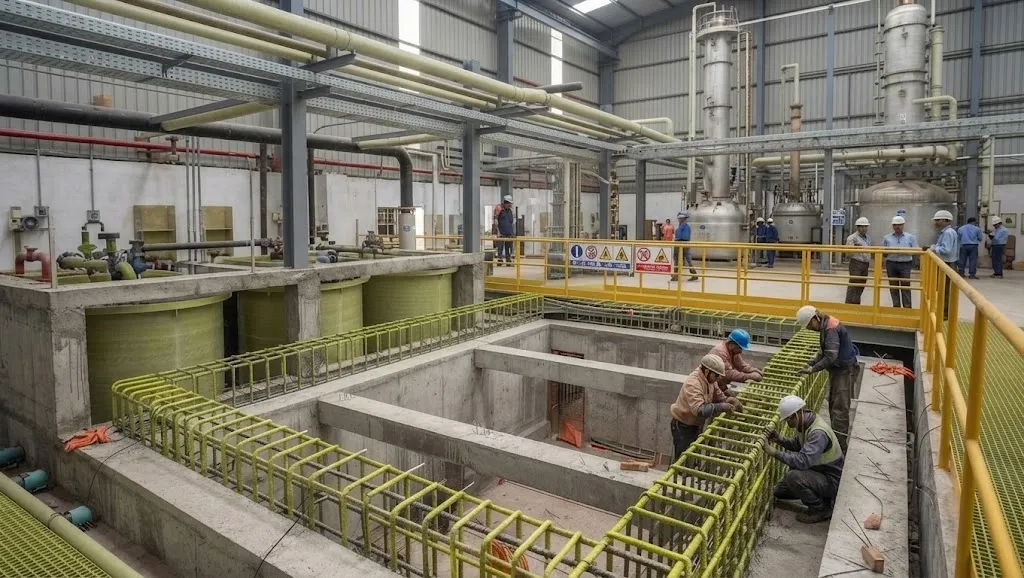

Rust Free World
Chemical-resistant reinforcement for safe processing facilities
Chemical plants require materials that can withstand aggressive chemicals, acids, and alkalis without corroding or degrading. GFRP provides superior chemical resistance and structural integrity for all processing facilities.
Sub-categories covered
Traditional steel reinforcement creates costly, long-term problems. GFRP solves them permanently.
Steel corrosion from chemical exposure Safety hazards from structural failure Frequent maintenance and repairs Regulatory compliance challenges High replacement costs
Resistant to all aggressive chemicals Long-term durability in harsh environments Improved safety standards Reduced maintenance and downtime Compliance with industry regulations
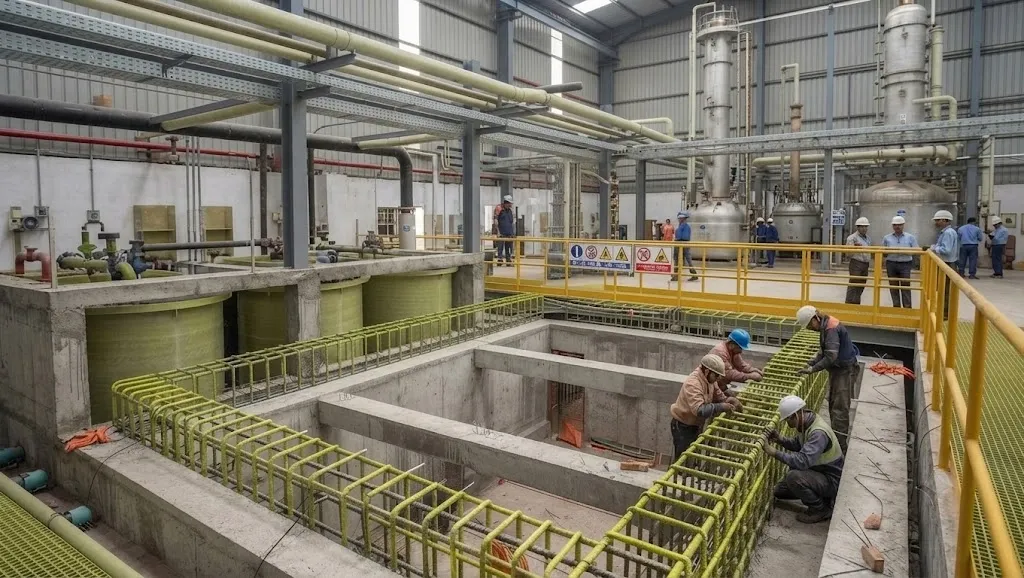
Primary Use Case
Chemical Plant Reinforcement
Used in chemical plants to prevent corrosion from acids, alkalis, and other aggressive chemicals. GFRP ensures structural integrity and safety.
Resistant to acids and alkalis
No corrosion in chemical environments
Safe for all processing facilities
Reduced maintenance costs
Long-term structural integrity
Performance parameters validated for this application domain.
Id
62
Tensile Strength
≥ 800 MPa
Modulus
40-50 GPa
Density
1.9-2.1 g/cm³
Corrosion Resistance
Thermal Expansion
All values tested under standard industry conditions
The Bhandari TechFab reinforcement we recommend for chemical plants.
Everything you need to know about GFRP rebar, our manufacturing process, and how we can support your next project.
GFRP rebar resists many acids, salts and chlorides that rapidly corrode steel, which makes it suitable for chemical plant floors, bunds, trenches and foundations. For specific chemicals, share the exposure list with us so we can confirm suitability.
Compare GFRP rebar with steel (TMT) on cost, weight and lifespan for your project in our free calculator.