
Rust Free World
Corrosion-resistant reinforcement for long-lasting drainage infrastructure
Drainage systems require materials that can withstand constant moisture, chemicals, and environmental exposure. GFRP ensures long-term structural integrity with its exceptional corrosion resistance.
Sub-categories covered
Traditional steel reinforcement creates costly, long-term problems. GFRP solves them permanently.
Severe corrosion due to constant water exposure Short lifespan of steel structures (10-15 years in wet environments) High repair costs and structural degradation Chemical attacks from wastewater Costly excavations for repairs
No corrosion in wet environments Long-term durability of 50-75 years Reduced maintenance and inspection costs Resistance to chemicals and sewage Lighter construction reduces installation costs
Primary Use Case
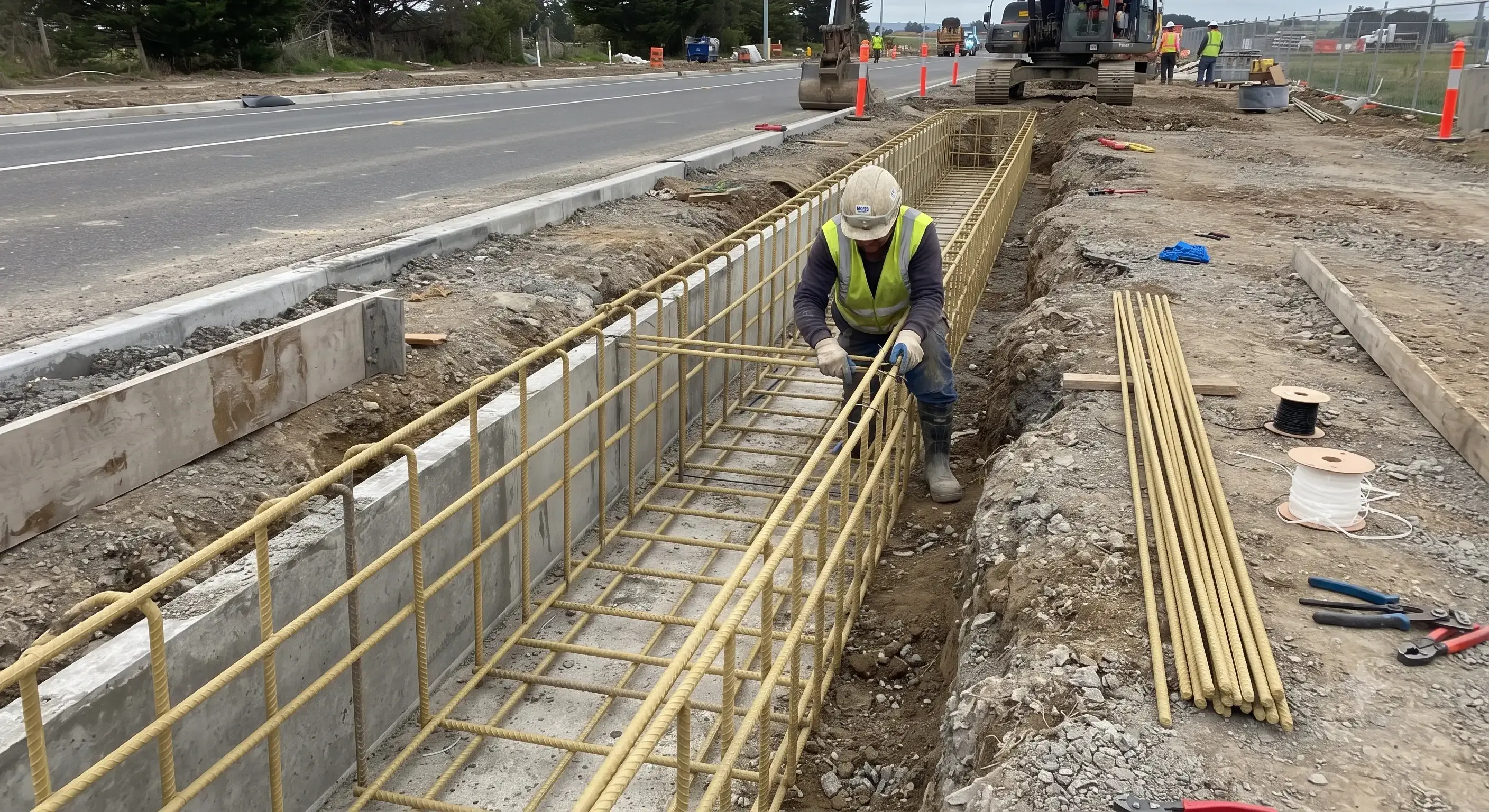
Drainage Channel Reinforcement
GFRP rebars are used to prevent corrosion in water-exposed concrete structures. The material's resistance to moisture and chemicals ensures long-term durability.
100% rust-free in wet environments
50+ years of service life
Resistance to sewage and chemicals
Minimal structural maintenance
Safe for water infrastructure
Performance parameters validated for this application domain.
Id
50
Tensile Strength
≥ 850 MPa
Modulus
42-52 GPa
Density
1.9-2.1 g/cm³
Corrosion Resistance
Outstanding
Thermal Expansion
All values tested under standard industry conditions
The Bhandari TechFab reinforcement we recommend for drainage systems.
Everything you need to know about GFRP rebar, our manufacturing process, and how we can support your next project.
Yes. Drains and sewers stay wet and carry chemicals and gases that rust steel quickly. GFRP is non-corrosive, so channels, culverts and sewer structures keep their strength without rust cracking.
Compare GFRP rebar with steel (TMT) on cost, weight and lifespan for your project in our free calculator.