
Rust Free World
Non-magnetic reinforcement for railway and industrial applications
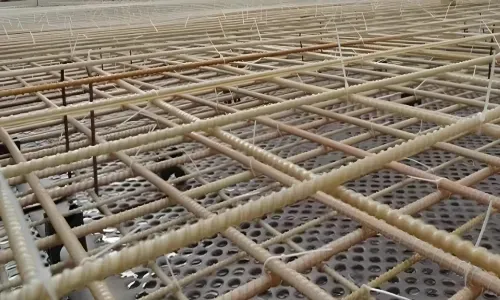
Friction slabs require materials with excellent fatigue resistance and non-magnetic properties. GFRP is ideal for railway tracks, heavy machinery bases, and precision equipment foundations.
Sub-categories covered
Traditional steel reinforcement creates costly, long-term problems. GFRP solves them permanently.
Steel interference with railway signaling Corrosion in exposed conditions Fatigue failure under heavy loads Magnetic fields affect train detection High maintenance costs
Non-magnetic for safe signaling Corrosion-resistant in all environments Superior fatigue resistance Lightweight for easier installation Long service life with minimal maintenance
Primary Use Case
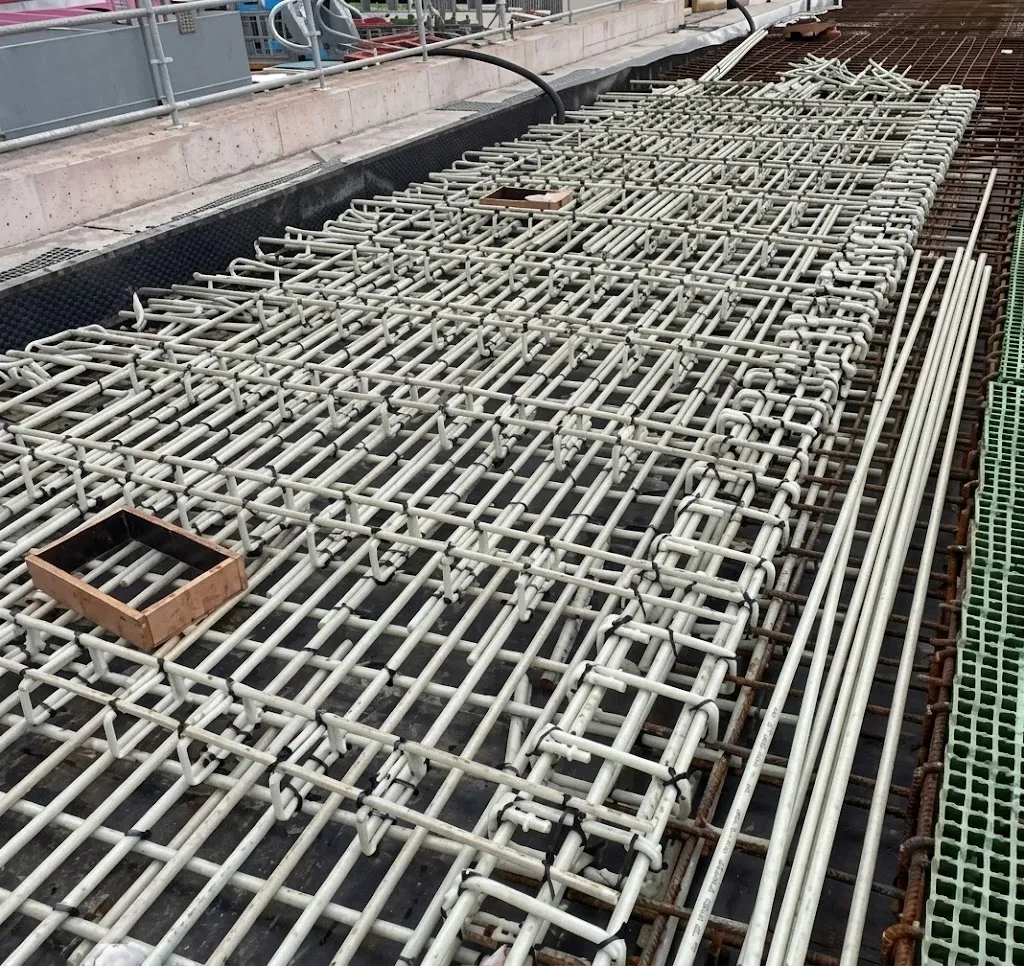
Railway Friction Slab
Used in railway friction slabs to ensure non-magnetic properties and long-term durability. GFRP's fatigue resistance ensures reliable performance.
Excellent fatigue resistance
Non-magnetic for railway signaling
Corrosion-resistant in all conditions
High tensile strength
Reduced maintenance costs
Performance parameters validated for this application domain.
Id
54
Tensile Strength
≥ 850 MPa
Modulus
42-52 GPa
Density
1.9-2.1 g/cm³
Corrosion Resistance
Thermal Expansion
All values tested under standard industry conditions
The Bhandari TechFab reinforcement we recommend for friction slabs.
Everything you need to know about GFRP rebar, our manufacturing process, and how we can support your next project.
A friction slab is a reinforced concrete slab that resists sliding or movement, used in railway track bases, heavy machinery bases and equipment foundations. GFRP is used because it is corrosion-free, handles repeated loading well and is non-magnetic.
Compare GFRP rebar with steel (TMT) on cost, weight and lifespan for your project in our free calculator.