
Rust Free World
Durable reinforcement for long-lasting highways
Highway construction demands materials that can withstand heavy traffic loads, de-icing salts, and harsh environmental conditions. GFRP provides superior durability and corrosion resistance for all highway applications.
Sub-categories covered
Traditional steel reinforcement creates costly, long-term problems. GFRP solves them permanently.
Steel corrosion from de-icing salts and moisture High maintenance and repair costs Traffic disruptions during repairs Structural deterioration over time Short lifespan of traditional reinforcement
Corrosion-resistant in all highway environments Long service life with minimal maintenance High tensile strength for heavy loads Reduced lifecycle costs No protective coatings required

Primary Use Case
Highway Construction Reinforcement
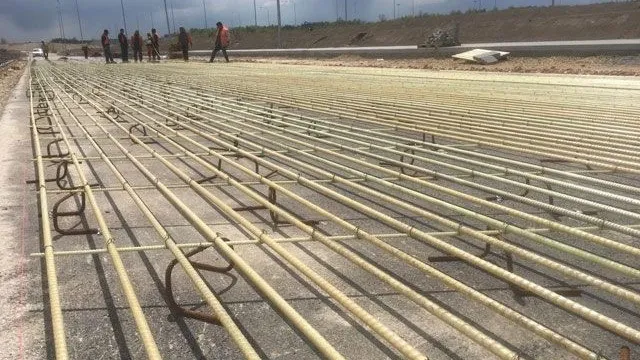
GFRP rebars are used in highway construction to prevent corrosion from de-icing salts and heavy traffic loads, ensuring long-term structural integrity.
Corrosion-resistant to de-icing salts
High load-bearing capacity
Reduced maintenance costs
Extended service life
Superior durability under heavy traffic
Performance parameters validated for this application domain.
Id
70
Tensile Strength
≥ 800 MPa
Modulus
40-50 GPa
Density
1.9-2.1 g/cm³
Corrosion Resistance
Excellent
Thermal Expansion
All values tested under standard industry conditions
The Bhandari TechFab reinforcement we recommend for highway construction.
Everything you need to know about GFRP rebar, our manufacturing process, and how we can support your next project.
Yes. IRC:137-2022 provides guidelines for using GFRP bars in road projects, and IS 18256:2023 covers GFRP bar specifications. GFRP is used in rigid pavements, culverts, crash barriers and drains on highways.
Compare GFRP rebar with steel (TMT) on cost, weight and lifespan for your project in our free calculator.