
Rust Free World
Non-magnetic reinforcement for medical imaging facilities
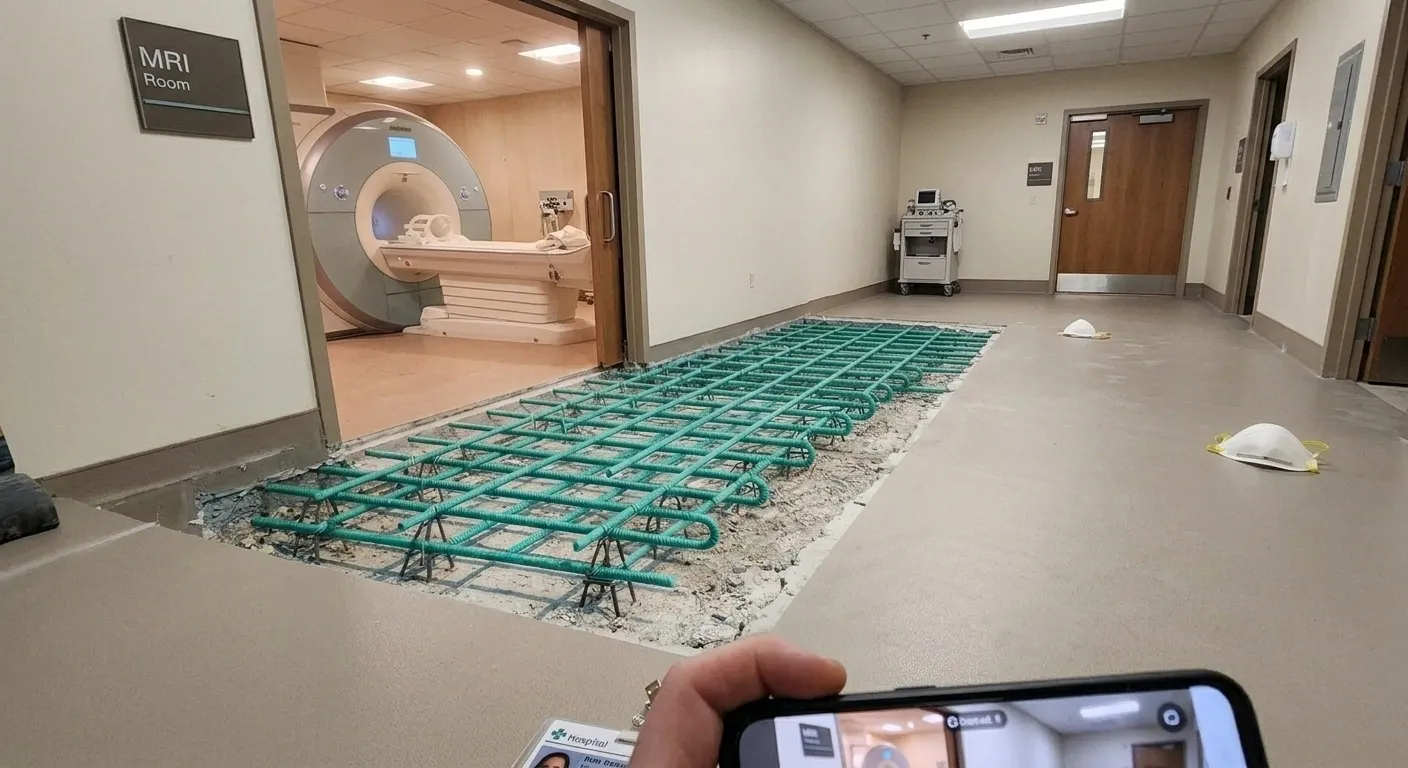
MRI rooms and medical imaging facilities require non-magnetic, non-conductive materials to ensure accurate diagnostics and patient safety. GFRP provides the ideal reinforcement solution.
Sub-categories covered
Traditional steel reinforcement creates costly, long-term problems. GFRP solves them permanently.
Steel interferes with MRI machines and medical equipment Safety concerns in sensitive medical zones Magnetic disturbances affect diagnostic accuracy Limited construction materials for MRI rooms Costly shielding requirements
Non-magnetic material eliminates interference No electromagnetic interference with medical devices Safe for medical environments and patients Reduced shielding requirements Cost-effective alternative to specialized materials
Primary Use Case
MRI Room Construction
Used in MRI rooms to eliminate electromagnetic interference, ensuring accurate imaging and patient safety.
Non-magnetic and non-conductive
No electromagnetic interference
Safe for sensitive medical equipment
Patient safety in sensitive zones
Accurate imaging results
Performance parameters validated for this application domain.
Id
82
Tensile Strength
≥ 700 MPa
Modulus
38-48 GPa
Density
1.9-2.0 g/cm³
Corrosion Resistance
Thermal Expansion
All values tested under standard industry conditions
The Bhandari TechFab reinforcement we recommend for hospital mri areas.
Everything you need to know about GFRP rebar, our manufacturing process, and how we can support your next project.
Steel reinforcement can disturb the MRI magnetic field and affect image quality. GFRP is non-magnetic and non-conductive, so it does not interfere with MRI scanners.
Compare GFRP rebar with steel (TMT) on cost, weight and lifespan for your project in our free calculator.