
Rust Free World

GFRP in Pavements
High-strength reinforcement for durable concrete pavements
Why GFRP for This Sector?
GFRP is widely used in concrete pavements for highways, bridges, and airport runways due to its superior strength-to-weight ratio and resistance to harsh environments.
Sub-categories covered
Problem → Solution
Traditional steel reinforcement creates costly, long-term problems. GFRP solves them permanently.
Structural Vulnerability
Chloride-induced corrosion in steel reinforcement causes structural deterioration High maintenance costs exceeding ₹8 Crores per pavement over its lifetime Structural weakening and reduced load capacity Costly traffic disruptions during repairs Steel's magnetic properties interfere with sensors and equipment
Permanent Immunity
High tensile strength (exceeds steel) and superior durability Resistant to chemicals, salts, and environmental exposure Reduced lifecycle costs by 40-60% Faster installation and lighter handling Non-magnetic for sensitive monitoring systems
Primary Use Case
Concrete Pavement Reinforcement
Concrete Pavement Reinforcement
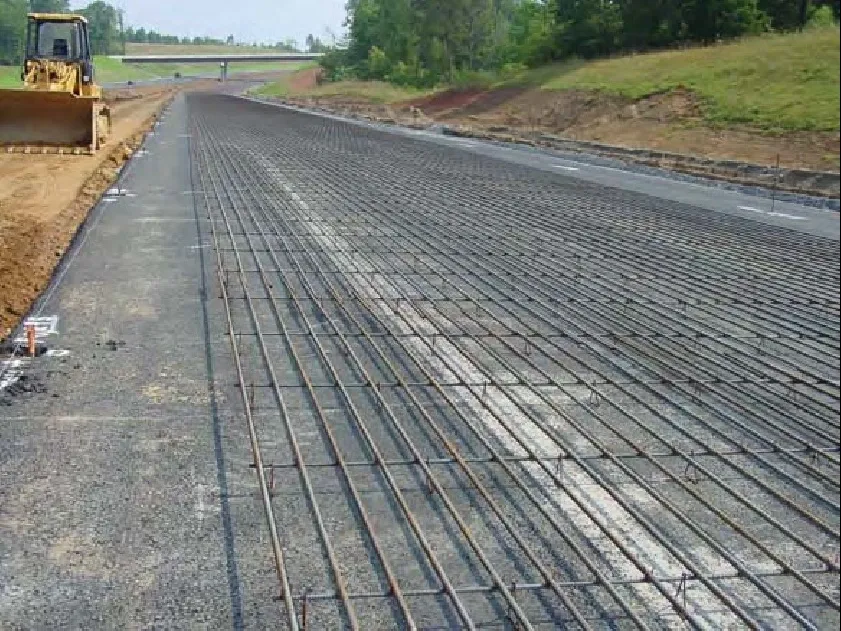
Used in concrete pavements exposed to heavy traffic and environmental stresses. GFRP's high tensile strength and durability make it ideal for load-bearing elements.
Reduced maintenance frequency by 70%
20% lighter than steel-reinforced pavements
Improved load capacity
Resistance to de-icing salts
Enhanced joint performance
Technical Specifications
Performance parameters validated for this application domain.
Id
4
Tensile Strength
≥ 900 MPa
Modulus
45-55 GPa
Density
2.0-2.2 g/cm³
Corrosion Resistance
Exceptional
Thermal Expansion
All values tested under standard industry conditions
Ready to build the future of construction?
Join the leading engineers who trust Bhandari GFRP Rebar for lighter, stronger, and corrosion-free structures.